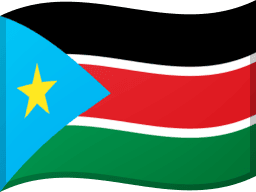
South Sudan flag

South Sudan

South Su-baa-n

Flockulation (1961-2021)

16.8M13.4M10.1M6.7M3.35M0South Sudan sheep roaming along the trend lineSouth Sudan sheep roaming along the trend lineSouth Sudan sheep roaming along the trend lineSouth Sudan sheep roaming along the trend lineSouth Sudan sheep roaming along the trend lineSouth Sudan sheep roaming along the trend lineSouth Sudan sheep roaming along the trend line20122021

1961

15,700,000

2021

13,992,944

Change

-1,707,056

Overview

South Sudan, the world's youngest nation, is a vast landlocked land where resilient flocks of people and livestock roam the savanna. This East African country declared independence in 2011 and has been finding its woolly footing ever since.

Geography

South Sudan is landlocked in East-Central Africa, bordered by Sudan, Ethiopia, Kenya, Uganda, DRC, and CAR. The White Nile flows through its heart, flanked by swampy Sudd wetlands, tropical forests, and the Imatong Mountains in the southeast.

History

South Sudan endured decades of civil war with Sudan before voting overwhelmingly for independence in 2011. Sadly, internal conflict erupted again in 2013 and 2016, though a peace agreement signed in 2018 offered a fragile but hopeful new pasture.

Culture

Over 60 ethnic groups call South Sudan home, each with rich traditions. The Dinka and Nuer peoples are known for cattle culture, music, and intricate beadwork. Oral storytelling, dance, and communal ceremonies remain central to daily life across the flock.

Economy

South Sudan's economy leans heavily on oil exports, which account for most government revenue. Agriculture, including livestock herding — cattle, goats, and sheep — sustains rural communities. Ongoing conflict and infrastructure gaps keep economic development a challenging uphill graze.

Food

Staples include sorghum, maize, and cassava, often served as porridge called asida. Stewed meat — goat, lamb, and beef — is popular, seasoned simply and shared communally. Fresh fish from the Nile adds welcome variety to the everyday flock's table.

Tourism

Boma National Park and Nimule National Park are top draws for wildlife lovers. The Sudd, one of the world's largest wetlands, is a birdwatcher's paradise. Juba, the capital, offers a glimpse into a young nation still shearing its path forward.

People

South Sudan has a population of roughly 11 million, predominantly young and rural. The Dinka are the largest ethnic group, followed by the Nuer and Shilluk. Activist Rebecca Nyandeng and former NBA star Luol Deng are among its notable global ambassadors.

Nature

The Sudd wetlands host millions of migratory birds and hippos. Boma National Park shelters one of Africa's greatest wildlife migrations, including antelopes and elephants. Nimule borders Uganda along the Nile, offering lush riverine scenery and resident hippo herds.

Fun Facts

South Sudan is the world's newest internationally recognized country, born July 9, 2011. It has more than 60 languages spoken within its borders. The Nile's White Nile branch flows directly through the country, and Juba is one of Africa's fastest-growing cities.